
What separates serious traders from hopeful gamblers
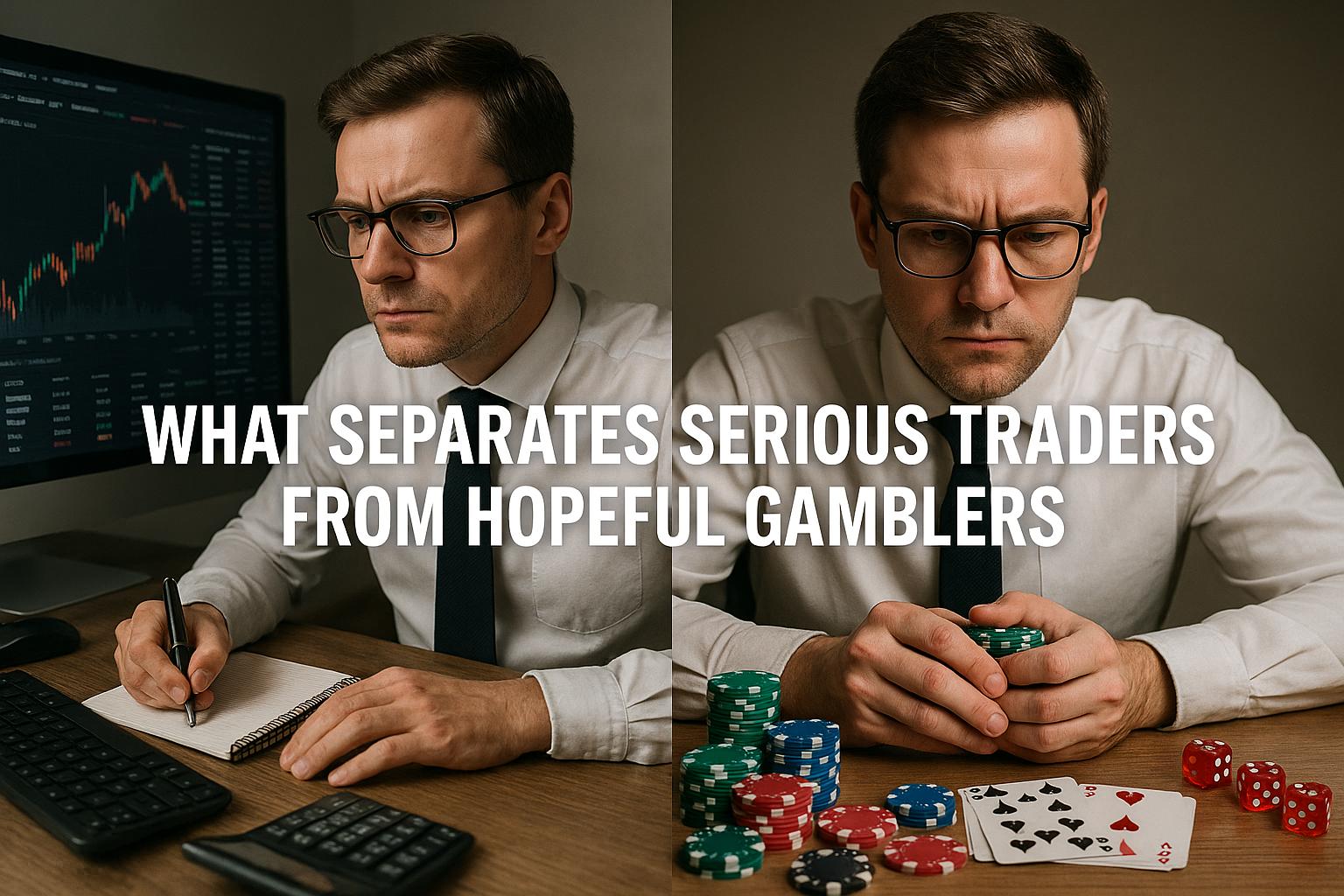
Understanding the Difference Between Serious Traders and Hopeful Gamblers
In the world of financial markets, the distinction between serious traders and hopeful gamblers can be subtle yet profound. Both may operate within the same markets and utilize similar tools, but their approaches, strategies, and outcomes often differ significantly. This article aims to delve deeper into the characteristics that differentiate a serious trader from a hopeful gambler, looking closely at various aspects such as risk management, the use of analytics, mindset and discipline, and the commitment to education and continual learning.
The Approach to Risk
One of the fundamental differences between serious traders and hopeful gamblers lies in how risk is managed. Serious traders have a well-structured approach to risk management. They employ tools like stop-loss orders, which are automated instructions to sell an asset when it reaches a certain price level, thereby limiting potential losses. Additionally, before committing capital to a trade, they perform a comprehensive risk-reward analysis. This involves evaluating the potential profit of a trade against the potential loss, ensuring that the reward outweighs the risk significantly before proceeding. Such careful consideration is crucial for maintaining a balanced portfolio and ensuring that no single trade has the potential to cause a disastrous impact on their financial health.
In contrast, hopeful gamblers often exhibit a more cavalier attitude toward risk. Their decision-making processes are frequently influenced by emotions rather than meticulous analysis. This emotional attachment can lead them to over-leverage their positions, which means borrowing too much to enhance their trading capacity without appropriate safeguards like stops. The absence of such precautions significantly increases the probability of substantial losses, which can be difficult to recover from.
Use of Analytics and Research
A serious trader leverages data and analytics as the foundation for their trading decisions. Before entering any trade, they conduct thorough research, delving into market trends, historical data, and economic indicators. Such traders may employ technical analysis tools, which involve the study of past market data primarily price and volume, to forecast future price movements. Alternatively, they might use fundamental analysis, which examines economic, financial, and other qualitative and quantitative factors to value an asset realistically. A comprehensive understanding of market conditions underpins their strategy.
On the other hand, hopeful gamblers frequently lack this depth of analysis. Their decisions might be based on hearsay, market rumors, or even mere intuition. This speculative approach leaves them more vulnerable to market volatility, often resulting in unpredictable and fluctuating returns. Without a solid foundation of research and data analysis, their trades become more like bets, with hopes pinned on luck rather than informed forecasting.
Mindset and Discipline
Another key differentiator between serious traders and hopeful gamblers is their mindset and level of discipline. Discipline is the hallmark of a serious trader. They adhere strictly to a well-defined trading plan and possess the patience required to wait for the right opportunities to arise. This discipline is particularly crucial during periods of market volatility when emotional decision-making can result in significant financial loss.
Hopeful gamblers often lack this level of discipline. They may chase after quick wins without a coherent plan or long-term strategy in place. This can lead to an erratic approach, driven by short-term market movements that defy predictable patterns, and often result in financial peril. Without a disciplined approach, their trading strategies become inconsistent, increasing the risk of substantial losses.
Education and Continual Learning
Serious traders understand the significance of continual education and learning. They recognize that staying informed about the latest market trends, policy changes, and new trading tools is vital to maintaining their competitive edge. Many serious traders attend seminars, webinars, and actively engage with industry experts to expand their knowledge and enhance their trading skills.
In contrast, hopeful gamblers may rely on outdated knowledge or assumptions, finding themselves unable to adapt to the constantly evolving market. This lack of commitment to ongoing learning can lead them to miss critical market signals or opportunities, placing them at a disadvantage compared to those who actively seek to update and refine their skills and knowledge base regularly.
Conclusion
In summary, the difference between a serious trader and a hopeful gambler primarily lies in their approach to risk management, analysis, discipline, and education. While both may operate in the same financial arenas, their strategies and mindsets set them apart. A serious trader’s focus on data-driven decision-making, structured risk management, disciplined adherence to strategic plans, and continuous learning equips them with the tools necessary to navigate the complexities of financial markets effectively.
For those aspiring to succeed in financial markets, aligning with the practices of serious traders is advisable. Emphasizing analysis, careful risk management, and a commitment to continuous learning can significantly enhance one’s trading proficiency and potential for success. Moreover, exploring educational platforms offering structured learning paths and expert insights can further bolster trading strategies, providing a solid foundation for effective market engagement and long-term financial achievement.
This article was last updated on: April 3, 2026